In real production, blade performance is often where uptime, cut quality, and maintenance cost are actually won or lost. An alligator shear may still cycle normally while the blade system is already declining, and the first signs usually appear as rougher cuts, more resistance, unstable cutting sound, edge damage, or shorter service life.
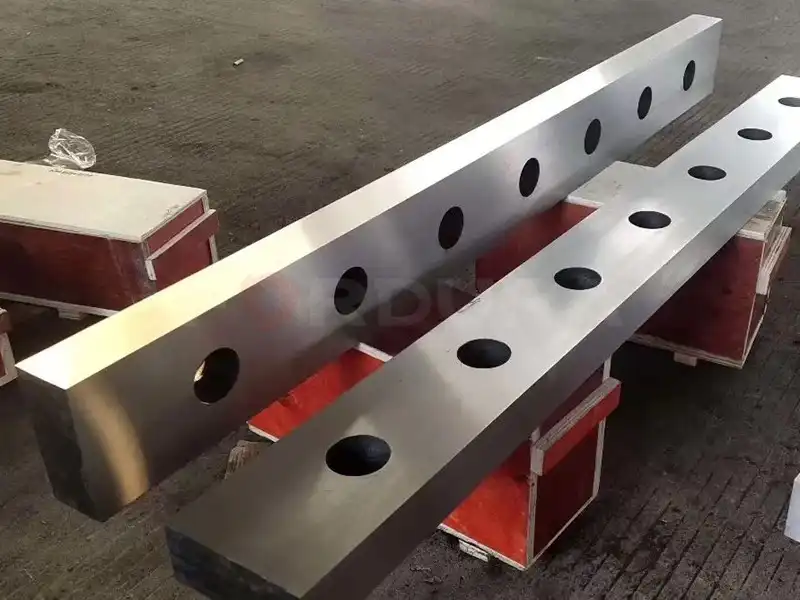
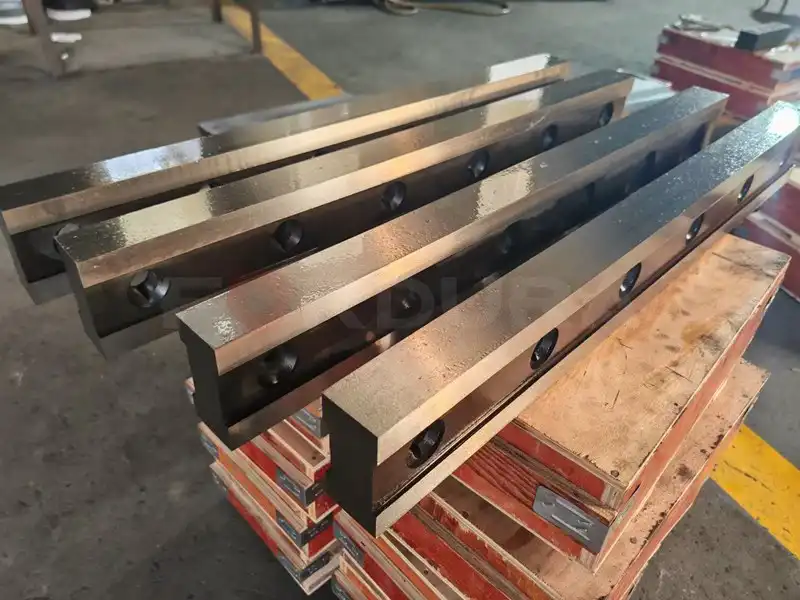
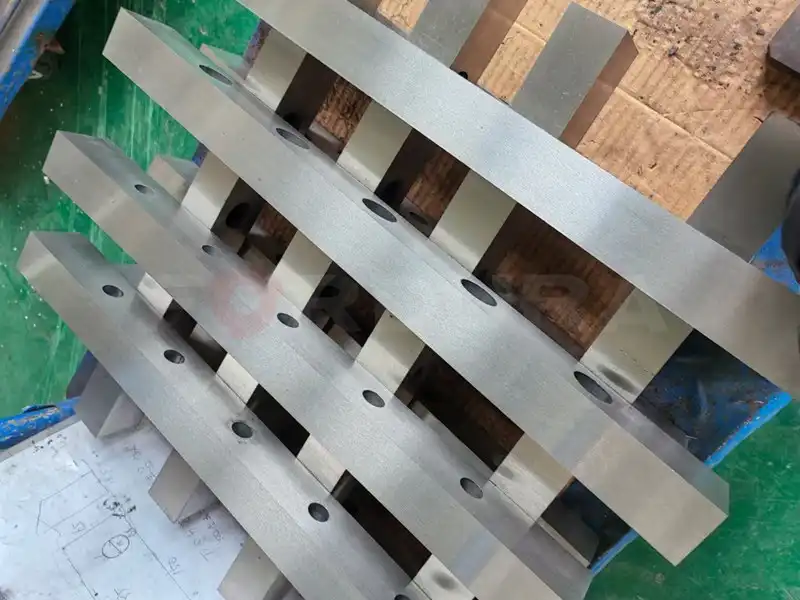
From a manufacturer’s perspective, an alligator shear blade should not be treated as a simple spare part. It is the working cutting interface between the machine and the scrap. Its steel grade, heat treatment, seating condition, installation accuracy, and clearance setting all influence cutting stability, blade life, and cost per ton processed.
For buyers and maintenance teams, the practical question is not which blade is the hardest or the cheapest. The real question is which material level and installation standard best match the scrap stream, production duty, and failure pattern of the machine.
Why Blade Choice Matters More Than Many Buyers Expect
Alligator shears do not work under laboratory conditions. They work in a repetitive impact environment, processing mixed scrap, varying section sizes, changing hardness, and often inconsistent feed conditions. Under these circumstances, blade failure is rarely caused by one single problem. More often, it results from the combined effect of material mismatch, excessive hardness, insufficient toughness, unstable mounting, poor alignment, unoptimized clearance, or overload cutting.
This is also why many blade failures are diagnosed too narrowly. A chipped edge is often blamed on “bad steel,” but the real cause may be shock loading from irregular scrap, a worn mating surface, or local movement caused by clamp instability. A blade that looks strong on paper may still perform badly if its material is right for wear resistance but wrong for impact resistance.
A well-performing alligator shear blade should do three things at the same time: hold a stable cutting edge, resist cracking or chipping under load, and wear in a predictable way that can be managed through maintenance. If one of those three conditions is missing, operating cost rises faster than most buyers expect.
Should Alligator Shear Blades Be as Hard as Possible?
If a blade is too soft, the edge loses sharpness too quickly and cutting performance falls off early. If a blade is too hard, it can become brittle and more vulnerable to chipping or cracking when the shear processes thicker sections, harder inclusions, or irregular shock loads. This balance matters because an alligator shear blade is exposed not only to sliding wear, but also to repeated impact.
The correct goal is not maximum hardness. The correct goal is application-appropriate hardness with enough toughness to survive the real cutting environment. In practice, that balance depends on the steel grade, the heat treatment route, the scrap profile, and the duty cycle of the machine
Material Comparison: 9CrSi, 55SiCr, M6V, 6CrW2Si, H13, H13K, and LD
For alligator shear blades, material selection should be based on failure mode, scrap type, and working duty. A low-cost material may look attractive at purchase, but become expensive through frequent replacement and downtime. A high-grade material may look impressive, but still be the wrong economic choice if the machine is only cutting regular light scrap.
Alligator Shear Blade Material Comparison Table
| Material | Positioning | Core Strength | Main Limitation | Best-Fit Application |
|---|---|---|---|---|
| 55SiCr | Entry-level budget option | Low purchase cost, workable for lighter service | Limited wear life and lower margin under heavier impact | Light-duty cutting, thinner scrap, budget-sensitive replacement |
| 9CrSi | Standard balanced material | Good practical balance of hardness, edge retention, and cost | Less forgiving than higher-toughness grades under unstable shock | General-purpose alligator shear blades for standard scrap |
| M6V | Value-grade upgrade over 55SiCr | Better consistency and service life than entry-level material without moving into heavy-duty pricing | Not the right choice for extreme thickness or severe shock load | Regular light-to-medium scrap, routine production, cost-performance focus |
| 6CrW2Si | Shock-resistant upgrade | Better structural stability and stronger impact handling | Not always the most economical choice for lighter work | More irregular scrap, stronger shock load, heavier service than standard duty |
| H13 | Heavy-duty standard upgrade | Strong toughness, heat resistance, and stable heavy-duty performance | Costs more than lower-tier materials | Thick sections, harder scrap, continuous industrial cutting |
| H13K | Enhanced heavy-duty upgrade | Better edge reliability in more complex and higher-impact cutting conditions | Higher cost than standard H13 | Mixed scrap, unstable feed, stronger impact load, more demanding production |
| LD | Premium anti-chipping / anti-cracking route | High toughness and strong resistance to edge collapse and cracking | Higher material and processing cost | Severe-duty cutting where downtime and unpredictable failure are costly |
How to Read This Table Correctly
This table should not be read as a simple ladder from “low grade” to “high grade.” In practice, each material solves a different combination of wear risk, impact risk, cost target, and service-duty requirement.
In buying terms, 55SiCr fits lower-cost and lighter-duty replacement. 9CrSi is a more standard balanced option for daily use. M6V is a practical value upgrade when buyers want better consistency without moving into heavy-duty pricing. 6CrW2Si becomes more relevant when shock handling matters more. H13 is the stronger heavy-duty baseline for thicker scrap and longer cutting cycles. H13K moves further toward mixed scrap and higher-impact duty. LD is the premium route when anti-chipping reliability and downtime control become more important than initial material cost.
In practical buying terms:
- 55SiCr works when low purchase cost is the main priority and the cutting duty is relatively light.
- 9CrSi is the more standard and balanced industrial choice when the buyer wants everyday usability without moving too far up in cost.
- M6V should be understood as a practical cost-performance improvement over 55SiCr, not as a premium wear-focused upgrade.
- 6CrW2Si becomes attractive when impact handling matters more.
- H13 is the more established heavy-duty upgrade when thickness, thermal load, and continuous cutting become serious.
- H13K moves further toward mixed, irregular, and higher-impact scrap streams.
- LD is the more premium route when anti-chipping, anti-cracking, and downtime control become critical.
Quick Material Selection by Working Condition
| Working Condition | Better Starting Material |
|---|---|
| Lowest-cost replacement | 55SiCr |
| Balanced daily use | 9CrSi |
| Better value for regular light-to-medium scrap | M6V |
| Higher shock and more irregular feed | 6CrW2Si |
| Heavy-duty stable cutting | H13 |
| Heavy-duty mixed scrap with more impact | H13K |
| Maximum reliability against chipping and cracking | LD |
Material Choice by Failure Pattern
If the blade wears too fast, the problem is usually not “hardness” alone. It may indicate that the material level is too low for the duty, the scrap is more abrasive than expected, or the heat-treatment consistency is not strong enough for the application.
If the edge chips or cracks early, the blade may be too brittle for the impact pattern, or the real issue may be overload cutting, poor seating, local movement, or clearance mismatch. In these cases, moving to a tougher material tier only helps when the installation condition is also corrected.
If service life is unstable from one blade set to another, the issue often goes beyond steel name. Fit accuracy, seating quality, clamping stability, alignment, and actual operating discipline should be reviewed together with the material grade.
How to Install Alligator Shear Blades Correctly
A good blade can still perform badly if it is installed on a contaminated seat, clamped unevenly, or positioned against a worn mating surface. Installation quality is not a secondary detail. It is part of blade performance.
1. Isolate the machine completely
Before touching the blade area, fully shut down the machine and isolate hydraulic and electrical power. Blade installation should never be done with residual movement risk present.
2. Clean the mounting area thoroughly
Clean the blade seat, clamp face, bolt holes, and surrounding contact surfaces. Metal fines, rust scale, trapped debris, or burrs can prevent full seating and create uneven local stress after tightening.
3. Verify blade dimensions and seating
Check length, width, thickness, hole spacing, countersink details, and edge orientation against the drawing or approved sample. Then dry-fit the blade to confirm that it sits flat and stable in the seat. If the blade rocks or shows visible gap, stop and correct the seating issue before tightening.
4. Inspect bolts, washers, and clamping surfaces
Fasteners must hold clamp force under repeated shock, not just during assembly. If threads are damaged, bolts are stretched, or clamping faces are worn, the blade can move microscopically under load. Even slight movement is enough to accelerate edge failure and seat damage.
5. Align the blade relative to the opposing edge
Check the position of the installed blade relative to the opposing blade or working centerline. Uneven edge relation causes localized stress, unstable cut entry, vibration, rough cut quality, and one-sided wear.
6. Tighten progressively and evenly
Do not fully tighten one end first and force the rest into position. Use a gradual and balanced tightening sequence so the blade seats evenly and clamp load is distributed more consistently.
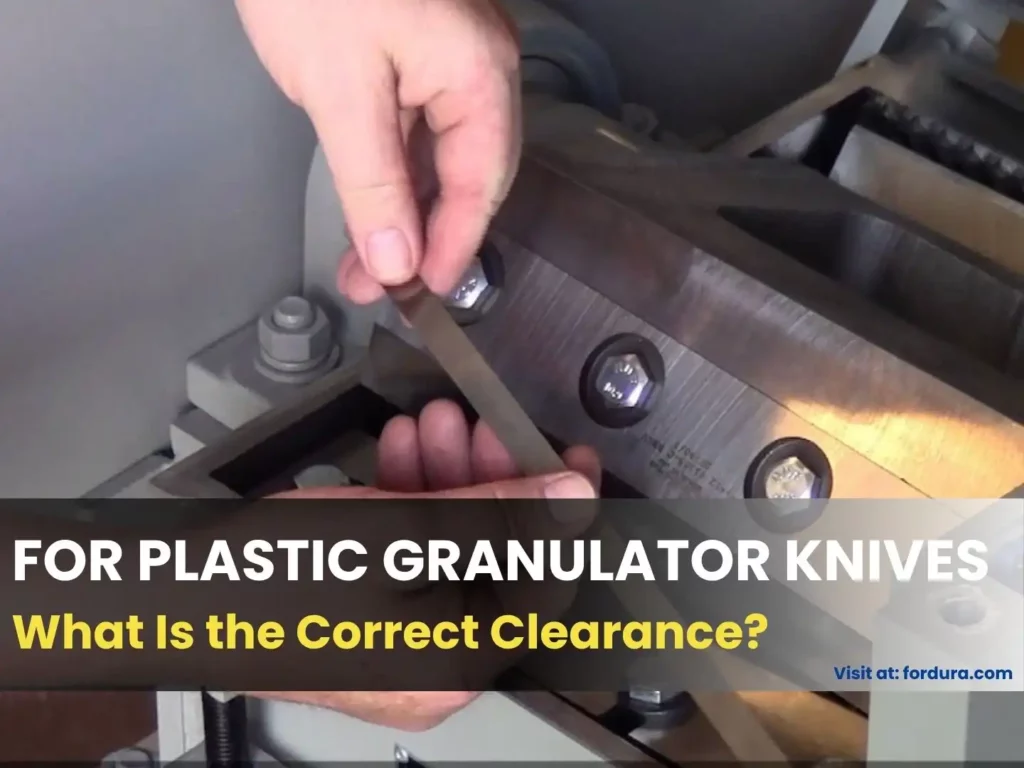
7. Confirm blade clearance
Blade clearance must match the machine condition, blade geometry, and actual scrap being processed. Too little clearance can create rubbing, heat, and edge damage. Too much clearance can increase deformation, worsen cut quality, and raise impact load.
8. Perform a controlled test cut
After installation, make a careful trial cut and inspect the result. Listen to the machine, observe vibration, check the cut surface, and recheck the blade area after the first few cuts
Common Blade Problems: Symptom, Cause, Action
| Symptom | Likely Cause | Recommended Action |
|---|---|---|
| Edge chipping shortly after installation | Material too brittle for impact load; overload cutting; poor alignment | Reassess material grade, verify alignment, review actual scrap condition |
| Fast edge wear | Material too soft for duty; abrasive scrap; heat treatment inconsistency | Upgrade material strategy and verify processing route |
| Uneven wear on one side | Blade not seated flat; clamp load uneven; jaw alignment issue | Reinspect seat flatness, fasteners, and relative blade position |
| Rough cut or excessive deformation | Clearance not optimized; mating blade worn; unstable cut entry | Check gap, inspect opposing blade, verify installation position |
| Cracking near bolt area or seating face | Stress concentration; poor support; local movement during cutting | Check contact integrity, bolt condition, and support surface |
| Abnormal noise or vibration | Loose mounting, position error, or interface damage | Stop production and inspect the entire blade installation condition |
Proactive Maintenance Checklist
Good blade life is not only a material issue. It is also a maintenance discipline issue. Plants that inspect early, clean regularly, and adjust before failure usually get lower cost per ton than plants that wait until the blade is already damaged.
[ ] Daily: Visually inspect for edge chipping, cracks, or loose mounting hardware. Listen for changes in cutting sound. More dragging or harsher “grinding” noise often indicates a duller edge.
[ ] Weekly: Clean the blade surface and mounting area. Remove accumulated debris that may affect seating, alignment, or clamp stability.
[ ] Every 80–100 operating hours: Check and adjust blade clearance. Rotate indexable blades if applicable so wear is distributed more evenly.
[ ] Every 500 hours or after major operating condition changes: Perform a full alignment verification using a straightedge and feeler gauges. Record the measurement data for maintenance tracking.
When to Regrind and When to Replace
Not every dull blade needs immediate replacement. In many cases, professional regrinding can restore useful cutting performance. But regrinding only makes sense when the blade body remains structurally sound.
A blade is still a good regrind candidate when wear is mainly at the edge, the blade body is not cracked, the mounting area remains reliable, and enough material is left to restore safe geometry. Replacement becomes the better decision when the blade has deep cracking, severe chipping, deformation, major seat-area damage, or repeated failure history under the same conditions.
The right maintenance strategy is to treat regrinding, indexing, inspection, and replacement as one life-cycle system rather than as disconnected emergency actions.
Buyer Checklist Before Ordering Replacement Blades
Before asking for a quotation, prepare the technical information that actually affects blade performance:
- Machine brand and model
- Blade drawing or accurate dimensions
- Scrap type and typical section size
- Main cutting thickness range
- Production duty and shift pattern
- Current blade material, if known
- Current failure mode: wear, chipping, cracking, or short life
- Whether you want direct replacement or a performance upgrade
The better the information provided, the easier it is for a real manufacturer to recommend the right steel grade, hardness window, and production route instead of offering a generic material without application judgment.