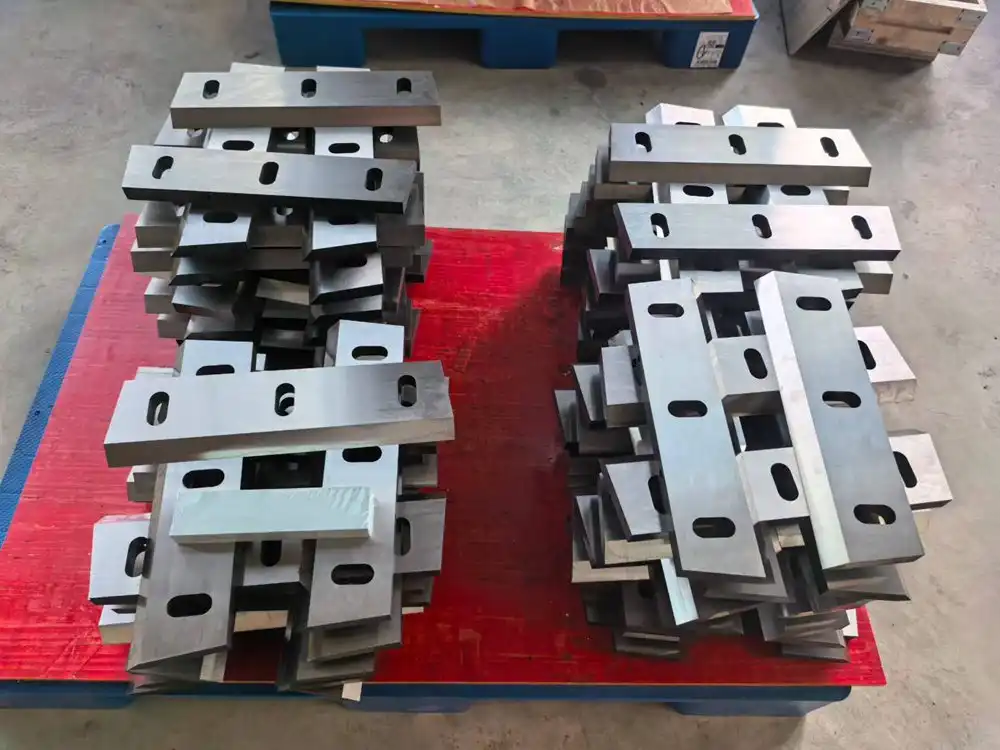
Choosing the right granulator blade material is not a matter of buying the hardest steel or the most expensive option. In real production, poor blade life, rolled edges, chipping, and unexpected breakage usually come from one root problem: the blade material does not match the actual feedstock condition.
At Fordura, we see this repeatedly in plastic granulation and size-reduction lines. A blade that performs well on clean PET bottle flakes may fail quickly in a dirty mixed-plastic stream. A grade that delivers strong wear resistance in nylon may become too brittle when metal contamination enters the feed. That is why blade selection must begin with the material being processed, not with the steel grade alone.
Why Blade Material Selection Starts with Feedstock, Not with Blade Price
Many buyers start by asking for a quotation on D2, DC53, or another familiar grade. That is understandable, but it skips the most important engineering step. A plastic granulator blade works under a combination of wear, impact, heat generation, and edge stress. The actual failure mode depends far more on the feedstock than on the catalog description of the steel.
In practical terms, there are two primary variables that decide the right blade material:
1. Feed Cleanliness
The first question is whether the material is clean or contaminated. Clean feed means the line processes relatively pure plastic with minimal hard foreign matter. Contaminated feed may contain metal fragments, sand, stones, glass, or other abrasive or impact-generating impurities.
This distinction is critical. A high-hardness blade can perform exceptionally well in clean service, but the same blade may chip or crack when repeated shock loads appear.
2. Feed Toughness
The second question is whether the plastic is soft and brittle or tough and elastic. Tough plastics such as PET bottles, nylon, and some engineered plastics place greater demands on edge retention and wear resistance. The blade must keep cutting cleanly without losing geometry too quickly.
A blade working on tough, clean plastics typically benefits from higher wear resistance. A blade working on dirty or impact-heavy feed usually needs more toughness and shock tolerance.
[💡] Technical Tip: In granulator applications, “harder” does not automatically mean “better.” High hardness improves wear resistance, but once contamination or impact rises, excessive hardness can shorten blade life instead of extending it.
Best Blade Materials for Clean, Tough Plastics
For clean plastic with relatively low contamination and high toughness, SKD11 / D2 and DC53 are usually the most effective choices.
SKD11 / D2: Strong Wear Resistance for Stable, Clean Processing
SKD11 and D2 are widely selected for granulator blades because they offer a strong balance of hardness and wear resistance after proper vacuum heat treatment. In many granulator applications, the working hardness is typically around HRC 58–60.
This makes them well suited for:
- clean PET bottle material
- nylon feed
- engineering plastics with low contamination
- long running hours where edge wear is the main failure mode
The real advantage is not just hardness. It is the blade’s ability to maintain cutting geometry over time. When the edge stays stable, granulation quality improves, current load stays more predictable, and the operator does not need to remove blades for sharpening as often.
In one stable bottle-processing condition, internal shop-floor comparison can show a very clear difference: after hundreds of operating hours, a D2/SKD11-type blade may still maintain a relatively controlled wear land, while a lower-grade tool steel can show much faster edge loss and more frequent maintenance demand. In production terms, that difference becomes labor savings, lower downtime, and more stable output.
⚠️ Facing Performance Issues?
If the machine is already showing fast wear, chipping, dust increase, or unstable cut quality, this [ granulator blade troubleshooting guide ] can help identify whether the problem comes from material mismatch, clearance, or edge condition.
DC53: A Higher-Performance Upgrade in the Right Conditions
DC53 is often selected when users want higher wear resistance without moving into an impractical material cost range. In properly controlled heat treatment, DC53 granulator blades can often reach HRC 60–62, while still retaining better toughness than many buyers expect from a high-hardness grade.
DC53 is especially valuable when:
- the line processes clean but demanding plastics
- the user wants longer sharpening intervals
- the production schedule makes downtime expensive
- consistent edge retention matters more than lowest purchase price
For example, on clean, tough plastics such as bottle-grade materials or selected nylon streams, DC53 can extend service life meaningfully compared with lower-performance steels. That does not mean DC53 is always the correct answer. It means DC53 is a strong answer when the feed is clean enough to let wear resistance create real return.
[🛠️] Maintenance Note: If a high-hardness blade chips early, the problem is not always heat treatment. In many cases, the actual issue is that the feed contains more hidden contamination than expected.
Best Blade Materials for Contaminated or Impact-Heavy Feed
When the feed contains metal fragments, hard impurities, or irregular mixed scrap, the selection logic changes. In that environment, choosing the hardest blade often creates the wrong outcome. The edge may resist wear, but the blade becomes more vulnerable to chipping or sudden breakage under repeated shock.
For contaminated feed, 9CrSi, 55SiCr, and in some dirty-duty cases M6V are often more practical options.
9CrSi: A Proven Choice for Dirty Feed and Frequent Impact
9CrSi is often chosen when users need a more impact-tolerant blade for mixed or contaminated material. With a typical working hardness around HRC 50–55, it does not compete with D2 or DC53 on pure wear resistance. That is not its job.
Its value lies in better toughness and more forgiving behavior under unstable feed conditions. If the material occasionally carries metal chips or other hard particles, 9CrSi is less likely to fail catastrophically. In many shops, this means fewer emergency stops and fewer expensive blade breakage events.
55SiCr: Better Shock Resistance in Rougher Conditions
55SiCr is often selected when the granulator sees stronger impact loading and the operator prefers a blade that can absorb abuse better. In dirty feed applications, the practical question is not “Which grade stays sharp the longest in theory?” but “Which grade survives the real line most reliably?”
That is where 55SiCr can make sense. It may not produce the longest edge life on clean feed, but in mixed or uncertain material streams it often offers a safer operating window.
M6V: Used When Toughness and Durability Under Abuse Matter Most
For some users processing irregular or contamination-prone feed, M6V is chosen as a more shock-tolerant solution. The goal here is not the sharpest theoretical edge retention. The goal is to keep the line running without frequent blade fracture or severe edge failure.
This is especially relevant for operators who deal with:
- mixed recycled plastics
- feed with unpredictable impurity levels
- unstable upstream sorting
- situations where toughness matters more than maximum hardness
💡 Pro Insight: Material selection should also be evaluated together with maintenance strategy, because the right steel only creates value when the blade is sharpened correctly and at the right interval. You can also review our guide on how to sharpen granulator blades for practical maintenance considerations.
The Most Common Blade Selection Mistakes
Mistake 1: Choosing the Highest Hardness by Default
This is one of the most expensive habits in blade purchasing. A harder blade is only better when the feed condition allows that hardness to work safely.
Mistake 2: Ignoring Contamination Level
Even small metal contamination can change the best material choice. A blade grade that performs beautifully on clean feed may fail much faster once impact enters the system.
Mistake 3: Copying Another Plant’s Material Choice
Two plants may both say they process “plastic waste,” but the real operating conditions may be completely different. Feed cleanliness, rotor speed, screen size, throughput, and sharpening practice all affect blade performance.
Mistake 4: Focusing Only on Purchase Price
A cheaper blade that needs more frequent replacement, more sharpening, and more downtime often becomes the more expensive option over a full operating cycle.
Quick Material Selection Table
| Material | Typical Hardness | Main Strength | Best Fit | Main Risk |
|---|---|---|---|---|
| SKD11 / D2 | HRC 58–60 | Wear resistance | Clean, tough plastics such as PET and nylon | Can chip if contamination is underestimated |
| DC53 | HRC 60–62 | Higher wear resistance with good toughness balance | Clean, demanding plastics and long-run production | Over-specification if feed is dirty |
| 9CrSi | HRC 50–55 | Toughness and impact tolerance | Contaminated feed, mixed plastics, occasional metal fragments | Faster wear in very clean, high-wear duty |
| 55SiCr | HRC 50–55 | Shock resistance | Rougher feed and unstable working conditions | Shorter wear life than high-hardness grades in clean duty |
| M6V | Varies by process | Durability under abuse | Dirty-duty lines where toughness is critical | May not be the most economical choice for clean feed |
Symptom / Cause / Action Quick Reference
| Symptom | Likely Cause | Recommended Action |
|---|---|---|
| Blade edge wears too fast | Material too soft for clean, tough plastic | Upgrade to SKD11 / D2 or DC53 |
| Blade chips unexpectedly | Material too hard for contaminated feed | Move to 9CrSi, 55SiCr, or a tougher solution |
| Blade rolls or deforms | Hardness too low or edge support insufficient | Recheck steel grade, heat treatment, and blade geometry |
| Frequent blade breakage | Hidden contamination or excessive impact loading | Re-evaluate feed condition and switch to higher-toughness material |
| Short sharpening interval | Wear resistance does not match material type | Review actual feedstock and operating hours before reordering |
A Practical Blade Selection Checklist
Before ordering new granulator blades, the most useful information is not only the machine model. It is the real working condition.
Check these points first:
- What plastic is being processed?
- Is the material clean or mixed?
- Does the feed contain metal, sand, glass, or stones?
- Is the plastic tough, elastic, or highly abrasive?
- Is the main failure mode wear, rolling, chipping, or breakage?
- How many operating hours are expected between sharpening cycles?
- Is lower blade price more important than lower total operating cost?
The more clearly these questions are answered, the more accurate the blade recommendation becomes.
Precision Manufacturing and Regrinding Also Matter
Material selection alone does not guarantee blade performance. Even the right steel will underperform if machining accuracy, heat treatment consistency, or final grinding quality is poor.
At Fordura, blade selection support is combined with manufacturing control. That includes blade geometry review, material recommendation based on feed condition, and precision grinding to maintain cutting consistency. In applications where regrinding is practical, a well-made blade also creates more value because it can be maintained more predictably over multiple service cycles.
For many users, the real goal is not to buy the “best” steel in abstract terms. The real goal is to reduce downtime, avoid unexpected blade failure, and reach a lower cost per ton processed.

Frequently Asked Questions
Choosing the right granulator blade material often depends on more than one variable. The questions below cover the most common concerns from plant managers, maintenance teams, and buyers comparing blade materials for different plastic processing conditions.