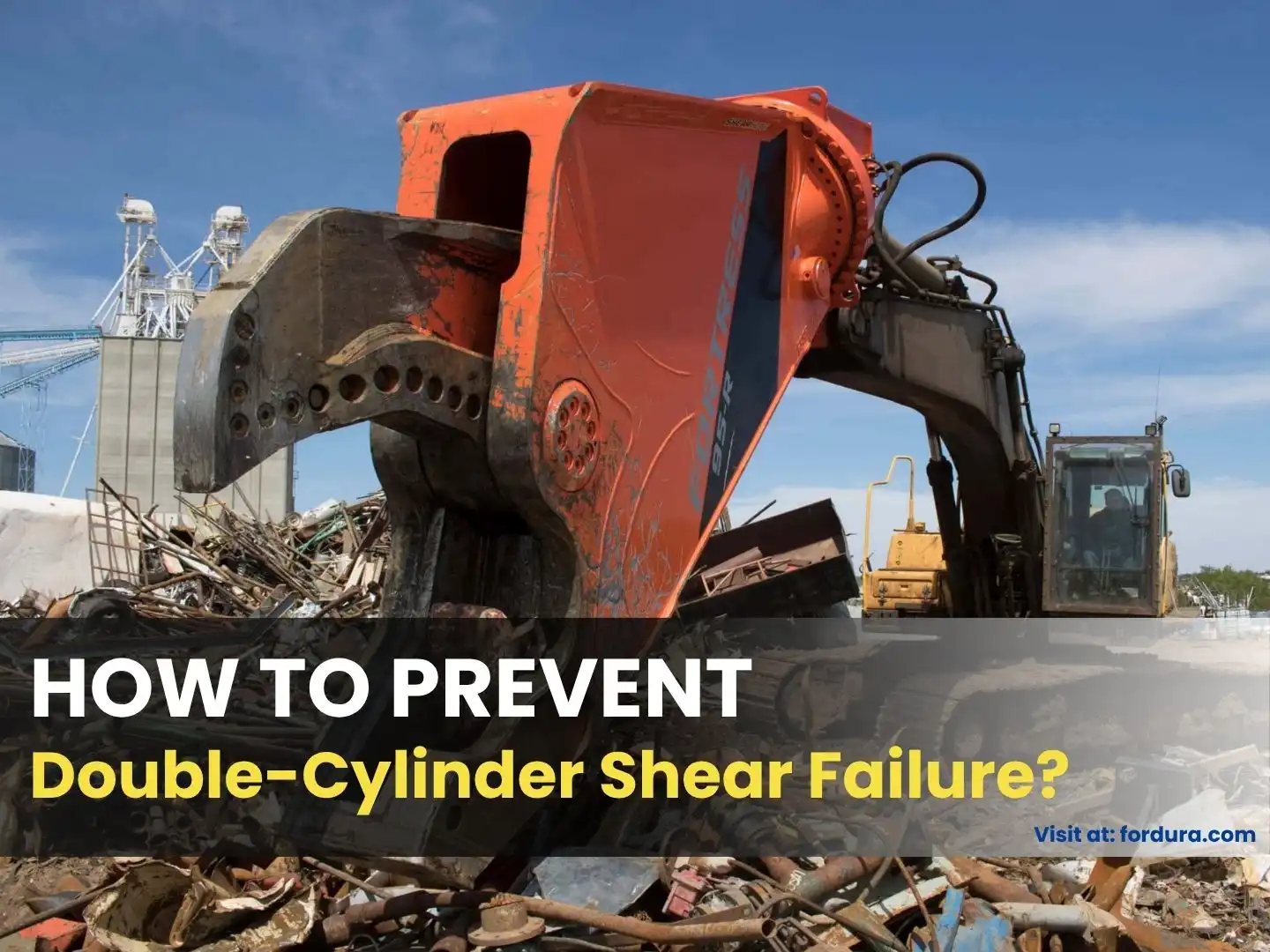
In double-cylinder shear systems, machine fracture is rarely a random event. What operators often see as a sudden structural failure is usually the final result of a longer chain of mechanical overload, unstable force transfer, poor blade condition, or incorrect blade matching. In many cases, the cylinders, frame, and welds are not the original problem. The problem starts earlier, at the cutting interface, where the blades meet the material.
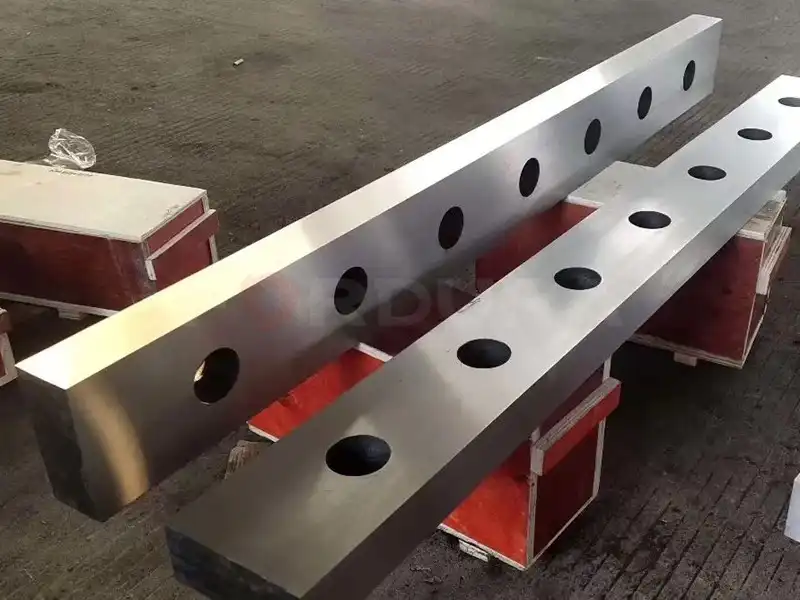
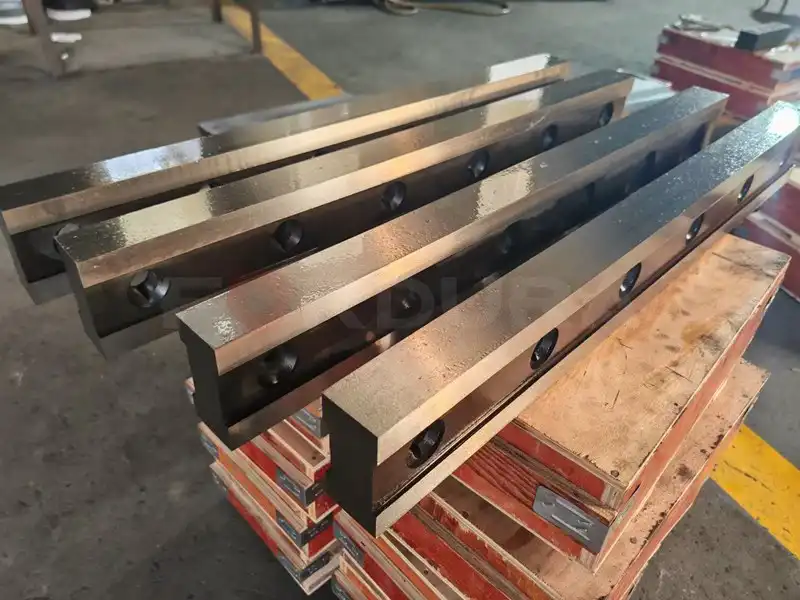
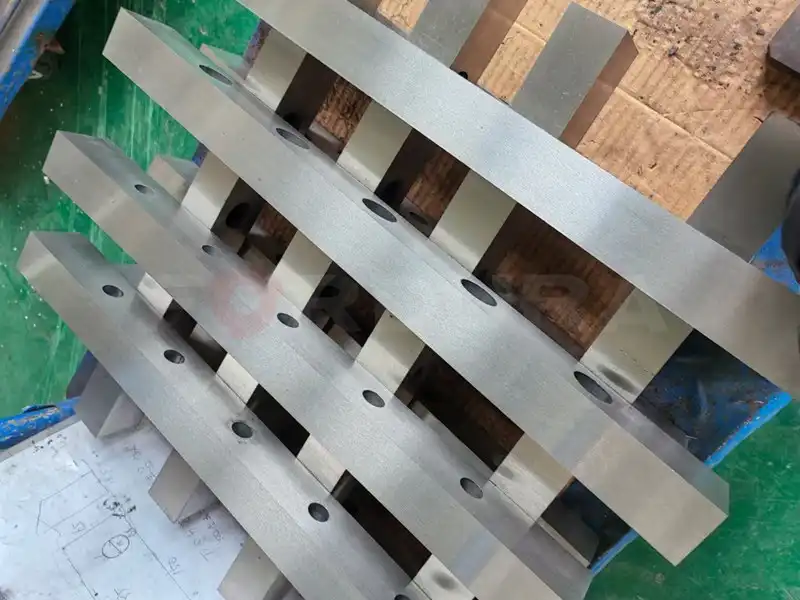
From a manufacturer’s perspective, the blade is not just a consumable part. It is the component that determines how cutting force enters the machine, how impact is distributed, how resistance builds during each stroke, and how safely that load is transferred through the blade holder, hydraulic cylinders, and frame structure. When the blade is used incorrectly, worn too long, or selected without regard to the actual scrap profile, the entire machine begins operating outside its intended load path. That is where fatigue starts, vibration rises, and fracture risk grows.
For this reason, preventing double-cylinder shear failure is not only a machine maintenance issue. It is a blade use and blade selection issue. This guide explains the most common blade-related causes of failure, the operating rules that reduce fracture risk, and the selection principles that help keep both the blades and the shear structure working safely over time.
Blade Misuse Is Often the Real Cause of Shear Failure
A double-cylinder shear is designed around controlled force transmission. Under normal operating conditions, the hydraulic system delivers force to the blades, the blades transfer that force into the scrap, and the remaining reaction load is absorbed by the machine structure in a predictable and balanced way. When this balance is maintained, the machine can run efficiently with stable cutting cycles, manageable vibration, and acceptable wear.
The problem begins when real operating conditions move outside that design envelope. Once the blades are exposed to shock loads, side loads, unbalanced feeding, or excessive cutting resistance, the machine no longer experiences a clean cutting load. Instead, it begins to experience impact, torsion, and irregular force spikes. Those abnormal loads do not stay at the blade edge. They travel through the blade seat, into the cylinder rods, across the frame, and into welded joints and structural corners where fatigue damage accumulates.
That is why many fracture cases should not be interpreted as a simple “machine quality issue.” In practical field conditions, blade misuse is often the trigger that turns a stable machine into a structurally stressed one.
The 4 Most Common Blade-Related Mistakes
1) Cutting material beyond the machine’s designed capacity
One of the fastest ways to damage both the blades and the machine is to cut material that exceeds the rated strength or thickness of the shear. This includes over-thick plate, oversized sections, dense alloy scrap, or heavily work-hardened material. When this happens, the blade edge faces a level of resistance far above what the cutting geometry and material grade were intended to handle.
2) Uneven feeding or overloading in a single cycle
Even when the material itself is within the machine’s nominal capacity, feeding can still create dangerous conditions. Overfeeding one cycle, loading too much scrap at once, or allowing the material to enter off-center creates localized force concentration. Instead of sharing the cutting load across the blade width, the load is driven into one area or one side of the machine.
This matters because double-cylinder shears depend on balanced force distribution. If one side of the blade engages a heavy load while the other side is lightly loaded or unloaded, the cylinders and frame experience asymmetric stress. Over time, this repeated side loading can produce torsional stress, unstable vibration, and structural fatigue. What looks like a feeding habit on the surface can become a long-term durability problem for the entire machine.
3) Continuing to run worn, chipped, or cracked blades
Blade failure is rarely a one-step event. In most plants, the blade begins to deteriorate gradually. Edge rounding increases cutting resistance. Small chips disturb the cutting path. Uneven wear changes the way load travels through the blade body. Once the edge condition is compromised, the machine has to work harder to finish the same cut.
That extra resistance shows up in several ways: higher vibration, more irregular cutting sound, increased hydraulic load, lower efficiency, and more unstable force transfer. If a chipped or severely worn blade remains in service too long, the machine no longer cuts cleanly. It hammers, drags, and shocks its way through the material. At that stage, both blade damage and machine fatigue accelerate together.
4) Using non-matching blade specifications to save short-term cost
Some users attempt to reduce procurement cost by replacing the original blade with a non-matching alternative. The dimensions may look similar enough at a glance, but the wrong blade thickness, hardness balance, bevel geometry, mounting tolerance, or material grade can significantly change cutting behavior.
A blade that is too hard may resist wear but chip under impact. A blade that is too soft may deform, lose edge retention, and increase resistance early. A blade with the wrong angle may generate unnecessary impact instead of smooth shear. A blade that does not match the holder or machine alignment can alter the force path altogether. In practice, a non-adapted blade can cost far more than it saves, because the damage does not stop at the blade itself.
Quick Risk Map: Blade Misuse and Mechanical Consequences
| Misuse Pattern | What Happens at the Blade | What Happens to the Machine | Recommended Action |
|---|---|---|---|
| Cutting over-spec scrap | Chipping, breakage, overload at the edge | Shock load reaches holders, cylinders, frame, and welds | Keep cuts within rated thickness and strength limits |
| Uneven or biased feeding | Localized pressure and unstable engagement | Side loading, torsion, vibration, structural fatigue | Feed evenly and avoid off-center loading |
| Running worn or cracked blades | Higher resistance and irregular cutting path | Increased vibration, unstable load transfer, fatigue accumulation | Inspect regularly and regrind or replace in time |
| Using non-matching blades | Wrong hardness, geometry, or fit changes cutting behavior | Force path deviation, imbalance, premature structural stress | Use blades matched to machine model and scrap type |
Four Operating Principles That Reduce Fracture Risk
1) Stay within the real cutting boundary of the machine
Every shear has a practical cutting envelope, not just a marketing specification. Safe production depends on respecting that real boundary in day-to-day operation. Operators should avoid processing unknown high-hardness material, oversized sections, or thickness levels that create shock rather than shear. When the incoming scrap quality is inconsistent, small-batch trial cutting is a safer decision than forcing the machine through uncertain loads.
From the factory side, this is one of the most important habits to develop. Blades cannot compensate for a cutting task that is fundamentally outside the machine’s mechanical design range.
2) Keep feeding balanced, controlled, and repeatable
A stable cutting process requires more than enough hydraulic power. It requires predictable loading. Scrap should enter in a way that allows the blade to engage progressively and evenly. Long sections should be aligned with the intended cutting direction. Operators should avoid heavy one-shot loading, diagonal entry, and bias that pushes one side of the blade into the work while the other side remains underloaded.
Machines fail faster when the process is not repeatable. Good feeding discipline reduces random force spikes and protects both the blade and the structure.
3) Treat blade maintenance as structural protection, not cosmetic maintenance
Too many users wait until the blade is visibly severe before taking action. In reality, maintenance should happen before the machine begins compensating for lost blade performance. Once the edge is rounded or chipped, cutting resistance rises immediately. That is the point where preventive action creates the most value.
As a practical rule, blade inspection should be scheduled frequently enough to detect edge rounding, local chipping, abnormal wear patterns, loose mounting, and surface cracking before they become a production problem. In heavy-duty use, checking blade condition every 3 to 5 working days is a sound preventive rhythm. Regrind early when possible. Replace when regrinding no longer restores geometry safely.
4) Match blade material and geometry to both machine and scrap
Blade selection should never be based on price alone. The correct choice depends on machine model, holder design, cutting force, scrap hardness, impact level, and expected duty cycle. A blade that performs well in one shear or one scrap stream may be a poor choice in another.
For general scrap processing, a cost-effective wear-resistant grade such as M6V may be appropriate when the load is stable and the material is not excessively tough. For heavier-duty work, unstable scrap, or higher-strength alloy material, a tougher grade such as H13 or X45MoV is often a better fit because it offers a more balanced combination of hardness, toughness, and resistance to chipping. In certain heavy-impact conditions, material and heat treatment must be evaluated even more carefully to prevent brittle edge failure and premature structural overload.
The correct blade is not simply the hardest blade. It is the blade that keeps the cutting process stable.
Blade Material Selection Quick Reference
| Application Condition | Recommended Direction | Why It Makes Sense |
|---|---|---|
| General scrap, stable loading, cost-sensitive operation | M6V | Good wear resistance and cost efficiency for standard-duty use |
| Higher-strength material, mixed scrap, greater impact risk | H13 or X45MoV | Better toughness-to-hardness balance and improved anti-chipping performance |
| Frequent shock load, severe duty, unstable cutting cycles | Custom evaluation required | Material, hardness, and geometry must be matched carefully to avoid brittle failure |
Inspection Checklist: What to Check Before Failure Starts
A blade problem should be identified before it becomes a machine problem. The following checklist is useful for operators, maintenance teams, and purchasing managers who want a clearer replacement standard.
Daily or routine operating checks
- Listen for abnormal cutting noise, impact sound, or unstable vibration
- Watch for reduced cutting efficiency or inconsistent stroke behavior
- Check whether material is entering evenly or creating side load
- Observe whether the machine is working harder on cuts that were previously stable
Blade condition checks
- Inspect the edge for rounding, local chipping, or breakage
- Check for uneven wear across the blade width
- Look for small cracks near corners, bolt areas, or loaded edge zones
- Confirm that blade seating and fastening remain stable
Maintenance decision checks
- Regrind when the edge is worn but geometry can still be restored
- Replace when cracking, severe chipping, deformation, or excessive thickness loss appears
- Do not keep a damaged blade in service simply to extend one more maintenance cycle
Symptom / Cause / Action Quick Table
| Symptom | Likely Blade-Related Cause | Corrective Action |
|---|---|---|
| Strong vibration during cutting | Worn edge, chipped blade, or unbalanced feeding | Inspect blade condition and correct feeding pattern |
| One side of the machine appears more heavily loaded | Off-center feeding or uneven blade engagement | Re-center the load and verify blade alignment |
| Blade life is shorter than expected | Wrong material grade or scrap exceeds duty design | Re-evaluate blade material and actual scrap profile |
| Repeated edge breakage | Blade too brittle for impact level or overload condition | Adjust grade, hardness strategy, and cutting practice |
| Machine shows fatigue near welds or structure | Long-term shock transfer from unstable cutting load | Correct blade condition, feeding method, and cut limits immediately |
Fordura’s Support: From Blade Selection to Safer Operation
At Fordura, we do not view hydraulic shear blades as isolated wear parts. We treat them as load-bearing cutting components that influence machine safety, cutting efficiency, downtime, and total cost per ton processed. That is why our support does not stop at manufacturing the blade itself.
At the selection stage, we help match blade specification, material direction, and working condition to the actual machine and scrap stream. During use, we can advise on installation, operating discipline, and common failure patterns that shorten blade and machine life. During maintenance, we help customers judge whether a blade should be reground, replaced, or upgraded to a more suitable grade. This full-cycle support reduces the risk of recurring failure and helps customers make better decisions before structural damage becomes expensive.
When the blade is right, the process is smoother. When the process is smoother, the machine lasts longer.