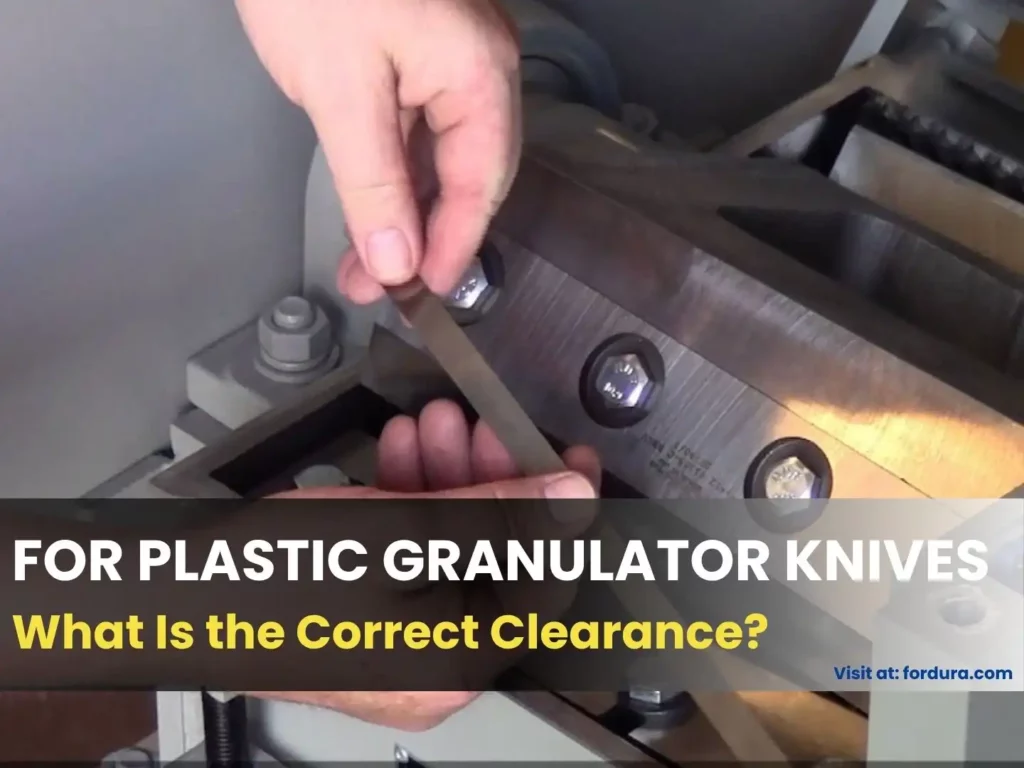
Granulator blades are often discussed as if they are simple consumable parts. In real production, they are nothing of the sort. They are precision cutting components that influence how efficiently material is reduced, how consistently particle size is controlled, how much energy the machine consumes, and how much mechanical stress the granulator places on its own rotor, bed knives, bearings, and drive system. When the cutting edge deteriorates, the problem is not limited to a dull knife. The entire cutting process becomes less efficient, less stable, and more expensive to run.
That is why granulator blade sharpening should never be treated as a basic workshop task. A blade that is merely ground until it feels sharp is not necessarily ready to return to production. To perform correctly, it must be restored with controlled geometry, reliable straightness, usable width, stable edge integrity, and proper compatibility with the rest of the knife set. In other words, sharpening is not just about recovering an edge. It is about recovering machine performance.
At Fordura, we approach granulator blade sharpening from the perspective of a manufacturer that understands cutting behavior, dimensional control, wear patterns, and total operating cost. This matters because many blade problems are not caused by sharpness alone. They are caused by loss of tolerance, poor matching between rotor and bed knives, repeated over-grinding, unsuitable blade material, or sharpening practices that restore appearance without restoring real function.
Why Sharp Granulator Blades Matter More Than Most Plants Realize
In many operations, the early signs of blade wear do not appear as dramatic knife failure. They appear as small but costly shifts in performance. The granulator may begin drawing more power, creating more heat, producing less consistent regrind, generating more fines, or sounding harsher under the same feed conditions. These are classic symptoms of a cutting system that is no longer shearing material efficiently.
A sharp blade improves more than edge condition. It supports cleaner shearing, lower friction, more stable feed engagement, and better control over granule quality. For processors handling rigid plastics, sprues, runners, film, mixed scrap, and contaminated recycled material, this directly affects production efficiency and maintenance planning. When blades become dull, the machine often compensates by working harder. That additional load increases cost far beyond the sharpening invoice itself. It shows up in power consumption, machine wear, maintenance frequency, and lost uptime.
When Granulator Blades Should Be Sharpened
The best time to sharpen granulator blades is not after severe damage has already occurred. It is when the blades remain structurally sound but have begun losing cutting efficiency. This distinction is important. Once wear progresses too far, sharpening may no longer be the most economical or technically sound option. Deep chipping, cracking, major width loss, and repeated grinding history can all push a blade beyond practical recovery.
Most plants will notice performance signals before they notice catastrophic edge damage. Rising amperage under the same material load is one of the most useful indicators. Increased chamber temperature is another. Inconsistent particle size, stringier regrind, greater dust generation, and more frequent knife-gap adjustment are also warning signs that the blades are no longer cutting cleanly.
A disciplined sharpening decision should be based on actual operating conditions, not on a fixed calendar interval. Blade life varies significantly with feedstock cleanliness, resin type, contamination, feed thickness, throughput, tramp metal exposure, and machine setup quality. A blade that lasts well in one plant may wear much faster in another processing more abrasive or dirtier material. This is exactly why manufacturers and experienced maintenance teams evaluate blade condition through process behavior, dimensional status, and actual wear mechanism rather than simple elapsed time.
How Granulator Blades Should Be Sharpened Professionally?
Proper granulator blade sharpening is a controlled grinding process designed to restore the cutting edge while preserving the geometry needed for stable machine performance. The objective is not to remove as much material as possible. The objective is to remove only as much as necessary.
Inspect, Clean, and Evaluate the Blade Before Grinding
A blade should be cleaned thoroughly before any sharpening work begins. Plastic residue, embedded contamination, and debris can interfere with inspection and measurement.
After cleaning, the blade should be evaluated for cracks, corner damage, edge chipping, warpage, mounting wear, and signs of previous poor grinding practice. This is the point where many low-level sharpening decisions go wrong. Some blades are still excellent candidates for regrinding. Others may technically be grindable but no longer make economic or engineering sense to return to service. A manufacturer-level review is valuable because it distinguishes between a blade that is dull and a blade that is fundamentally near the end of its usable life.
Measure Before Material Removal
Professional sharpening begins with dimensional control. Before grinding, the blade should be measured for width, thickness, straightness, flatness, and edge wear depth. The purpose of this step is not administrative. It is operational. If too much material is removed, the blade may lose the width or geometry needed for correct installation and stable knife gap.
This matters especially in granulator applications, where cutting performance depends on predictable relationship between rotor knives and bed knives. A blade that looks freshly sharpened but has inconsistent width or compromised straightness may still cut poorly, overload one side of the machine, or create setup difficulty during installation.
Grind with Controlled Geometry
The sharpening process should use stable, accurate equipment capable of maintaining the intended edge geometry across the full blade length. The blade must be held securely, passes must be controlled, and the amount of material removed must be minimized.
From Fordura’s perspective, the key issue is not whether the blade can be made sharp again. The key issue is whether it can be returned to service with correct functional geometry. That includes usable width, straightness, edge quality, and compatibility with the rest of the knife set. This is why true sharpening is a precision restoration process, not just a surface refresh.
Control Heat During Grinding
Heat management is one of the most overlooked factors in granulator blade sharpening. Excessive grinding heat can reduce edge integrity, damage the blade surface, and shorten service life after reinstalling the knife.
A blade that has been thermally damaged may still look sharp, but its wear behavior can deteriorate quickly in production. In practical terms, poor heat control turns sharpening into hidden blade damage. That is one reason why professional grinding discipline matters so much more than appearance.
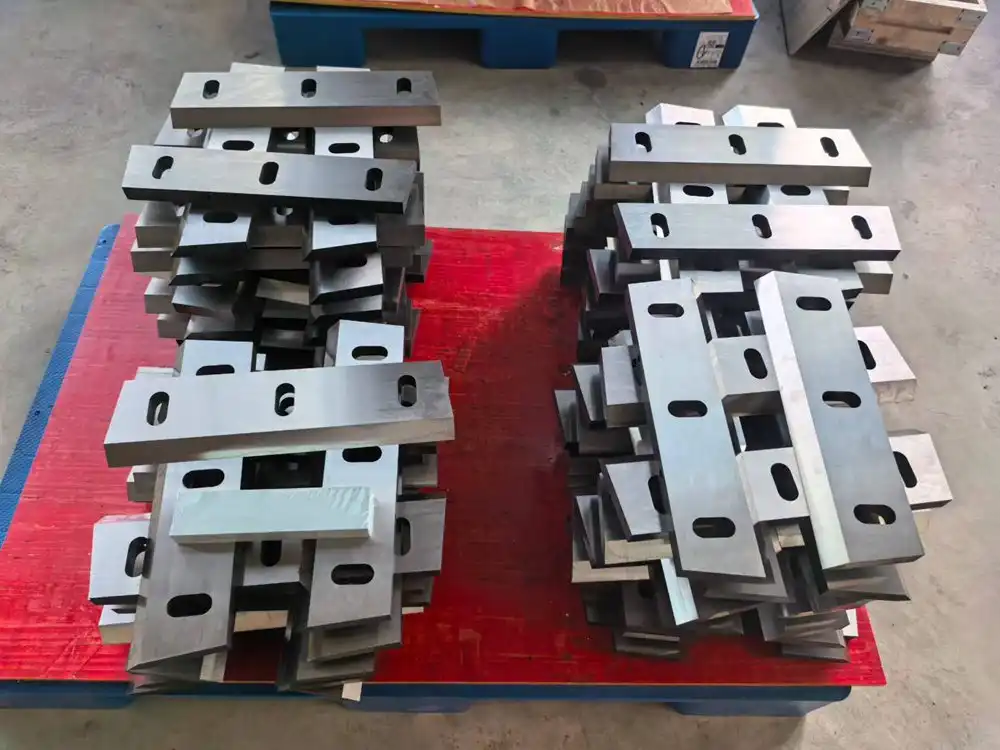
Sharpen Rotor and Bed Knives as a Matched Set
One of the strongest practical recommendations found in industry guidance is that granulator blades are often best sharpened as a complete set. Granulator blades should be sent for sharpening as a full set so the required knife-to-knife tolerances can be maintained.
This principle is critical. Rotor knives and bed knives do not function independently. They form a cutting system. If one part of that system is restored while the rest remains worn, unmatched, or dimensionally inconsistent, cutting performance may remain unstable. Sharpening the set together improves the chances of achieving correct clearance, more uniform cut engagement, and smoother restart after installation.
What Can Go Wrong During Granulator Blade Sharpening
Granulator blade sharpening can fail in ways that are not always immediately obvious. One common mistake is removing too much material in a single cycle. That may create a visually clean edge, but it reduces the number of future regrinds available and may make correct machine setup more difficult later. Another frequent problem is evaluating the blade by edge appearance alone. A polished edge does not guarantee dimensional accuracy.
Overheating during grinding is another serious risk, especially when the process is rushed or cooling is poorly controlled. Poor set matching is also common. When blades with different remaining widths, wear histories, or grinding conditions are mixed together, knife clearance becomes harder to control and service life can become inconsistent.
The final risk comes after sharpening. Even a correctly reground blade can perform badly if the machine is reassembled with poor knife-gap adjustment or if bed knives and rotor knives are not returned in a compatible configuration. Sharpening and installation should always be treated as linked stages of one maintenance process.
How Many Times Can Granulator Blades Be Reground?
There is no single answer that fits every blade and every application. The number of possible regrinds depends on original blade size, remaining usable width, amount of wear per cycle, severity of damage, machine adjustment range, and the precision of past grinding work.
From a manufacturer’s standpoint, the correct question is not “How many times can this blade be reground?” The correct question is “After this regrind, will this blade still operate correctly, safely, and economically in the machine?” Once that answer becomes uncertain, replacement becomes the more responsible solution.
Sharpening vs. Replacement: Which Option Delivers Better Value?
Sharpening is often highly cost-effective when the blade remains structurally healthy and enough geometry is left to restore performance correctly. It can extend blade life and reduce immediate maintenance spending. But sharpening is not automatically the best value in every case.
If the blade is cracked, deeply chipped, repeatedly over-ground, or near its minimum functional width, replacement may deliver better long-term economics. The same is true when production losses, unstable output, rising power draw, or repeated machine adjustment have already become more expensive than the cost difference between regrinding and replacing. In those cases, continuing to sharpen is not really saving money. It is postponing a more effective decision.
This is one of the reasons Fordura takes a broader view. We do not only ask whether a blade can be sharpened. We ask whether sharpening, replacing, or upgrading the blade material will lower the customer’s total operating cost under actual production conditions.
Why Fordura Is a Better Long-Term Partner for Granulator Blade Users
Fordura is not positioned as a generic knife seller or a simple sharpening workshop. We are a manufacturer focused on industrial cutting components for demanding recycling and size-reduction applications. That means we look beyond the edge itself. We look at fit, tolerance, steel selection, wear mechanism, processed material, machine compatibility, and the cost consequences of unstable cutting performance.
For customers, this changes the conversation. Instead of only asking for blade sharpening, they can evaluate whether their current knife design is still right for the material being processed. They can determine whether recurring wear is actually caused by application mismatch, contamination, poor set consistency, or an unsuitable blade specification. They can also move beyond repeated short-term repairs and toward more reliable OEM or replacement blade solutions.
Fordura supports customers with replacement granulator blades, matched knife sets, application-based recommendations, and manufacturer-level guidance on whether regrinding still makes sense. For processors that care about uptime, repeatability, and cost per ton, that is a much stronger value proposition than simply restoring a cutting edge.
Need Better Granulator Blade Performance, Not Just Sharpening?
If your granulator is drawing more power, generating more heat, producing poorer regrind, or requiring frequent knife adjustment, the issue may not be the machine alone. It may be time to review the real condition of your granulator blades and decide whether a basic regrind is enough.
Fordura works with recycling plants, plastic processors, equipment manufacturers, and maintenance teams that need more than a generic blade service. We help evaluate blade wear, knife geometry, material application, and replacement options from a manufacturer’s perspective. That leads to better decisions, longer blade life, and more predictable production performance.
FAQ: Granulator Blade Sharpening
How do you sharpen granulator blades correctly?
Granulator blades should be cleaned, inspected, measured, and then ground with controlled material removal using proper cooling and accurate workholding. The goal is not only to restore a sharp edge, but also to maintain straightness, usable width, and compatibility with the rest of the knife set.
When should granulator blades be sharpened?
Granulator blades should be sharpened when cutting efficiency begins to decline but before severe damage develops. Common signs include higher power draw, more heat, poor granule consistency, increased fines, and more frequent knife-gap adjustment.
Should rotor and bed knives be sharpened together?
Yes, in many cases they should be sharpened as a matched set. Granulator knives work as a cutting system, and sharpening them together helps maintain knife-to-knife tolerance, more consistent clearance, and more stable cutting performance. This aligns with common industry guidance that full-set sharpening helps preserve required tolerances.
How many times can granulator blades be reground?
There is no universal number. It depends on the original blade size, the amount of wear per cycle, the minimum usable width, past grinding history, and the adjustment range of the machine. A blade should only be reground when it can still return to service safely and perform correctly.
What happens if granulator blades become too dull?
Dull granulator blades can increase electricity consumption, raise machine temperature, reduce cut quality, and place more load on the granulator. Industry guidance also notes that dull blades can make the machine work harder and contribute to overheating.
Is it better to sharpen or replace granulator blades?
Sharpening is usually the better option when the blade is still structurally sound and enough geometry remains to restore performance properly. Replacement is often better when the blade is cracked, heavily chipped, repeatedly over-ground, or near its minimum usable width.
Can poor sharpening reduce blade life?
Yes. Overheating, excessive stock removal, poor straightness control, and mismatched blade sets can all reduce service life after sharpening. A blade may look sharp after grinding but still perform poorly if dimensional control and edge integrity are not maintained.
Why choose Fordura for granulator blade solutions?
Fordura offers more than blade sharpening advice. As a manufacturer of OEM and replacement industrial knives, we help customers evaluate blade wear, tolerance, fit, machine compatibility, and material application so they can choose the most cost-effective solution for long-term performance.